By Mike "Jabs" JaballahFounder and Director. Location Sound Recordist.
The best microphones for podcasting are dynamic mics, because they hear your voice and much less of the room. For most XLR setups, the Shure SM7B is still the one to beat. For a single USB mic you plug straight into a laptop, look at the Shure MV7+ or RØDE PodMic USB.
Not sure which suits your voice and your room? Hire one and record a test episode before you buy.
What are the best microphones for podcasting?
The best podcast microphones are the ones matched to your room and your setup. Here are the mics we'd actually recommend, most of which we hire out of our studio in Footscray, plus two USB options worth buying if you're recording solo.
| Microphone | Type | Connects by | Best for | Hire or buy |
|---|---|---|---|---|
| Shure SM7B | Dynamic | XLR | Best overall, studio sound in normal rooms | Hire |
| Sennheiser MD 421 | Dynamic | XLR | A classic broadcast voice | Hire |
| Shure SM58 | Dynamic | XLR | Budget, tough, guests who wander | Hire |
| Shure MV7+ | Dynamic | USB and XLR | Serious solo podcasters | Buy, ~$443 |
| RØDE PodMic USB | Dynamic | USB and XLR | Solo shows that might grow | Buy, ~$279 |
| Sennheiser MKH 416 | Shotgun | XLR | Video podcasts with mics out of shot | Hire |
| DPA 4060 | Lavalier | Wireless or XLR adapter | Walk-and-talks and location episodes | Hire |
Which podcast microphones do we recommend?
We recommend the Shure SM7B for most podcasts, the Sennheiser MD 421 if you want a classic broadcast sound, and the Shure SM58 if budget or durability matters most. For solo USB shows, buy a Shure MV7+ or RØDE PodMic USB.
1. Shure SM7B: best overall
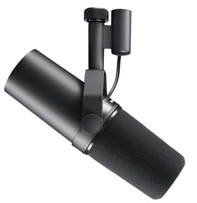
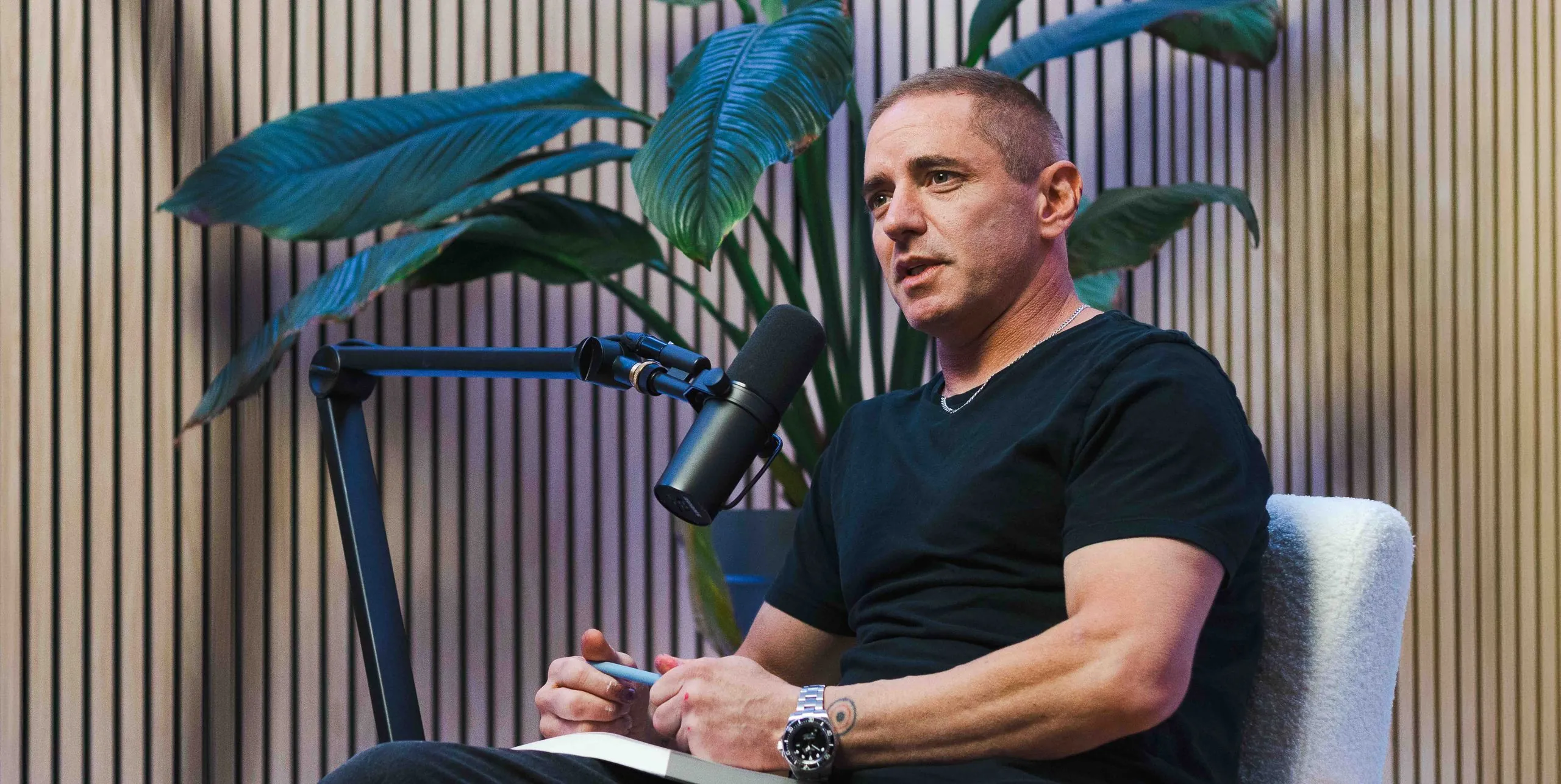
The SM7B is still the best podcast microphone for most people, and it's what every person in our podcast studio talks into. We've got 8 of them in our own audio hire inventory, which says it all. It's a dynamic mic with a soft, warm, natural sound that a lot of recording engineers love, and it rejects background noise well, which is a huge deal when you can't always record in a studio. It's built like a tank, with solid metal construction and an internal shock mount. It's also multi-purpose: vocals, instruments, guitar amps, drums… and loud people.
One catch. The SM7B is a quiet microphone, and it needs a lot of clean gain. Shure says it likes around +60 dB, and plenty of budget interfaces run out before that. Use a recorder with strong preamps, or add an inline booster like the Cloudlifter CL-1.
2. Sennheiser MD 421: best broadcast sound
The MD 421 is one of the best-known dynamic mics in broadcasting. Its secret weapon is a five-position bass control. The "S" setting is for speech and trims the boomy low end you get when someone talks right up on the mic. It's a great pick for a host with a deep voice, or anyone who wants that radio-studio sound.
3. Shure SM58: best on a budget
The SM58 is the vocal mic you'll find in most venues, and there's a reason. It's cheap, near indestructible, and forgiving with guests who lean in, lean back and wave their hands around. It won't sound as rich as an SM7B, but for a casual show or a big panel it does the job.
4. Shure MV7+: best USB mic to buy
If you're recording on your own straight into a laptop, a USB mic keeps things simple. The MV7+ is a dynamic mic with both USB and XLR outputs, so you can start plug-and-play and move to a proper recorder later. An Australian 2026 guide ranks it the best overall USB mic for serious podcasters, at around $443.
5. RØDE PodMic USB: best value USB mic
The PodMic USB is built for speech and also has USB and XLR, so it grows with you. It's made by RØDE, a Sydney company, and the same guide prices it at around $279. Good value if you're starting out and want to keep your options open.
6. Sennheiser MKH 416: best for video podcasts
When the show's on camera and you don't want a mic in front of every face, a shotgun on a boom just out of frame does the job. The MKH 416's tight pickup is why it's on so many film and TV sets. Our guide to boom mics vs lav mics covers how to set one up.
7. DPA 4060: best for walk-and-talks
For episodes recorded on the move or on location, a lav mic stays with the speaker wherever they go. The DPA 4060 is one of the best-sounding lavs money can buy, as long as it's placed well.
Dynamic or condenser: which is better for podcasting?
Dynamic microphones are better for most podcasts, because they pick up the voice right in front of them and much less of the room. Condenser mics sound more detailed, but they hear everything, which is a problem in a normal home room.
The same 2026 Australian guide puts it well: a condenser picks up the fridge, the ceiling fan and the bin truck three streets over, so for most people recording at home, dynamic is the safer pick. Every microphone on our list except the shotgun and the lav is a dynamic.
USB or XLR: which podcast microphone should you get?
Get a USB mic if you're recording one person straight into a laptop. Get XLR mics if there's more than one person talking, because every voice can then go into one recorder on its own track.
XLR mics need a recorder or audio interface to power them and turn them into files. A podcast recorder like the RODECaster Pro II handles four mics in one box. Our guide to what equipment you need for a podcast covers the full setup for one, two or four people.
Should you buy or hire a podcast microphone?
Hire first if you're still testing the show, or if you're not sure which mic suits your voice. Buy once your format is locked in and you're recording every week.
The best way to choose a mic is to hear your own voice through it, in your own room. Hire a couple, record a test episode on each, then buy the one that sounded like you. If you want the whole setup in one booking, our podcast recording package has the kit sorted, so you know that side is handled properly.
Questions we get asked
Does the Shure SM7B need a preamp?
It needs a lot of clean gain. Shure says around +60 dB, which many budget interfaces can't supply on their own. Use a recorder with strong preamps, or add an inline booster like a Cloudlifter.
What microphone does Creative Kicks use for podcasts?
The Shure SM7B. Every person in our Footscray podcast studio gets one, and we keep 8 in our hire inventory.
Is a USB microphone good enough for a podcast?
Yes, for a solo show recorded straight into a laptop. Once two or more people are talking, XLR mics into one recorder are easier, because every voice lands on its own track in one device.
Is a dynamic or condenser mic better for podcasting?
Dynamic, for most people. A dynamic mic focuses on the voice in front of it and picks up much less room noise, which matters in an untreated home room.
Can I hire a podcast microphone in Melbourne?
Yes. We hire the Shure SM7B, Sennheiser MD 421, Shure SM58 and more from Footscray, with pickup or Melbourne metro delivery.
Try before you buy
Hire an SM7B or two for a test episode. Collect from Footscray or get it delivered across Melbourne.